24M's ETOP: A Battery Revolution for EVs?
Amidst fluctuating demand for electric vehicles, groundbreaking battery innovations continue to emerge. 24M Technologies, a Massachusetts-based company, is making waves with its "SemiSolid" battery architecture and its ETOP (Electrode-to-Pack) system. This technology promises to significantly enhance EV performance by improving range, charging speed, and overall battery efficiency.
The Inefficiency of Traditional Battery Packs
Current EV batteries typically employ a multi-layered structure. Individual cells, each encased in protective material, are grouped into modules, which are then assembled into a final pack. While this approach is reliable, it's not the most efficient. Though cell-to-pack designs offer some improvements, 24M suggests that conventional EV batteries dedicate only a fraction of their volume to actual energy storage, with the rest occupied by packaging and support structures.
ETOP: A Paradigm Shift in Battery Design
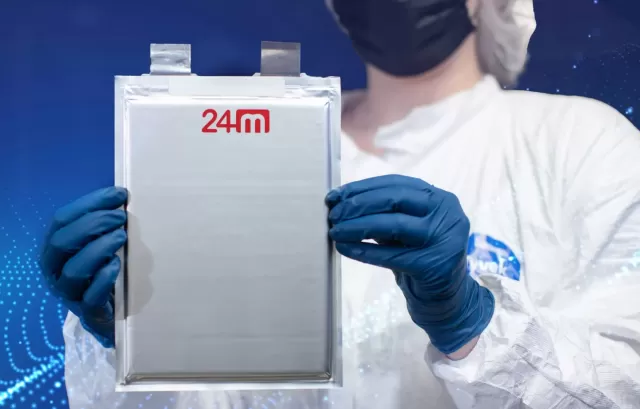
24M's ETOP technology offers a fresh perspective. Rather than housing energy-storing materials within numerous individual cells, ETOP encapsulates electrodes in thin polymer films and stacks them directly into the battery pack. This eliminates the need for separate casings and modules, significantly reducing wasted space.
By maximizing the proportion of active material (the part that stores energy) to up to 80% of the pack's volume, ETOP boosts energy density. This increased density can translate into extended driving ranges, smaller and more affordable battery packs, or a blend of both.
Inside the "Cells": Innovation at the Core
Each electrode receives a coating of electrolyte material, followed by the application of a separator, creating a sandwich-like structure. This assembly is then sealed within a thin polymer film. 24M's "Impervio" separator features a conductive layer between two polyethylene (PE) insulating layers. This proprietary design inhibits the growth of metal dendrites, which can cause short circuits and potentially lead to fires. Despite their thin profile, these cells remain individually monitored for voltage and faults by the battery management system. Unlike traditional prismatic cells that rely on a shared, flammable electrolyte, ETOP discretely seals the electrolyte within each electrode assembly.
Decoding "SemiSolid" Technology
24M's "Eternalyte" electrolyte is a liquid engineered for exceptional ionic conductivity with diverse cathode chemistries. This enables remarkably fast charging times. "Eternalyte" also maintains high performance even in extreme cold. "SemiSolid," a trademarked term, refers to 24M's unique manufacturing process, which eliminates binders and drying agents. This results in thicker, clay-like "semi-solid" electrodes that accommodate a greater quantity of battery active material, leading to improved energy density.
Real-World Benefits for EV Owners
Imagine a 75-kWh battery pack (a common size in mid-size EVs) capable of holding over 100 kWh of energy using the same materials and space. This translates to a substantial range increase. Alternatively, automakers could opt for more cost-effective and safer chemistries like LFP (lithium-iron phosphate) while maintaining current driving ranges, making EVs more accessible without sacrificing performance.
Space-Saving Design
Beyond eliminating dead space, the 24M manufacturing method enables the electrode/separator sandwiches to be tailored to various sizes and shapes. This adaptability allows for better utilization of previously unused spaces within a vehicle, such as the wings of an electric aircraft. In cars, this design can free up space for enhanced legroom and increased cargo capacity.
Cost-Effective Manufacturing
24M emphasizes that their streamlined process requires fewer precision manufacturing steps, leading to lower factory costs, improved production yields, and a more straightforward quality control process. The ability to easily wire the cells in parallel or series facilitates the achievement of desired voltages, accommodating applications like 48V systems for hybrids or switchable 400/800-volt packs for rapid charging.
The Broader Implications
ETOP embodies a new approach to battery design, maximizing usable space and improving overall efficiency. By minimizing wasted volume, 24M's technology holds the potential to unlock EVs and other electric vehicles with extended ranges, ultra-fast charging capabilities, and reduced costs. These are all features that consumers are eager to see.
While the claims surrounding ETOP are based on promising laboratory results, further validation is needed to confirm its widespread viability. Nevertheless, this innovation represents a significant step forward in battery technology, and its progress will be closely monitored.